Proof
Built for controlled telecom storage, tracking, and rollout readiness
Warehousing only works when it is auditable, traceable, and dispatch-ready. Screamer Electronic Services runs controlled telecom warehousing and asset management to reduce stock uncertainty, speed deployment, and keep returns and recovery disciplined.

Huawei — Outstanding Delivery Guarantee Award (2025)
Recognition for delivery performance under operational pressure — the same discipline that keeps inventory controlled and rollout timelines predictable.
- Proven delivery reliability in high-volume programmes
- Process discipline that supports uptime and rollout deadlines
Credibility highlights
- 14 secure warehouses: controlled access, disciplined handling, and inventory governance.
- Climate-controlled storage: temperature and humidity control for sensitive network assets.
- High-security zones: monitored handling discipline for high-value telecom equipment.
- ERP-integrated visibility: real-time inventory control and movement history (SAP/BAAN environments supported).
- ESD-safe storage + handling: anti-static protocols for components like optical modules and PCB assemblies.
- Reverse logistics ready: returns route cleanly into quarantine, recovery, repair/refurb, resale, or recycling.
- ISO 9001:2015-aligned procedures: traceability, audit readiness, and controlled exceptions.
Operational scale
Scale matters when you support rollout waves, RMA streams, and spares availability. These are directional indicators of operational capability.
A strategically located footprint can reduce transport overhead and support smarter distribution routes — helping teams cut delays and support sustainability targets.
Why choose screamer
Stop losing spares to spreadsheet reality
Efficient telecom asset management keeps rollouts, RMAs, and spares controlled as networks expand and modernize. We provide secure storage, real-time visibility, and disciplined inventory movement for high-value telecom equipment.
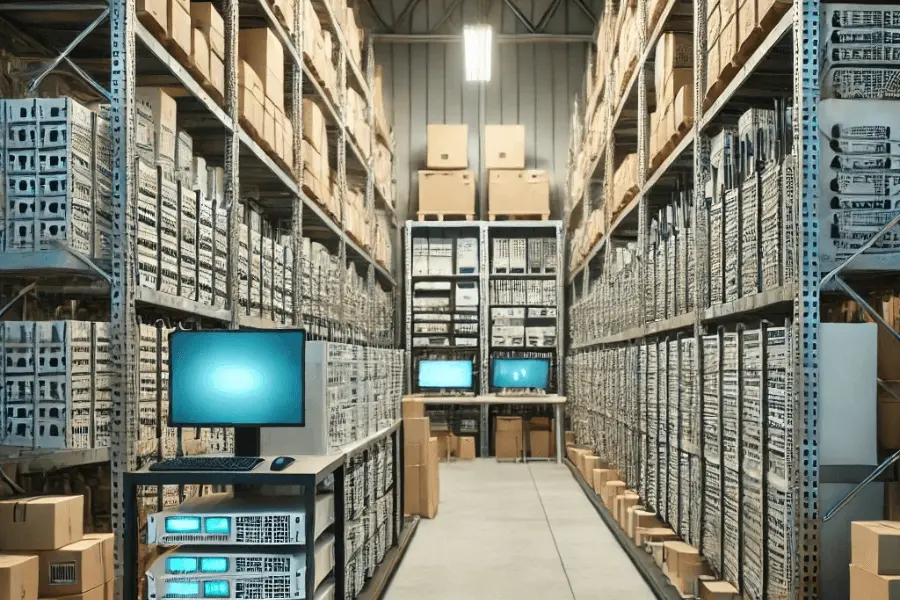
Asset management
Secure telecom warehousing + asset control that stays audit-clean
Efficient telecom asset management and smart warehousing are vital to maintaining a resilient, cost-effective supply chain. We provide controlled storage, real-time tracking, and inventory discipline built for high-value telecom equipment and rollout pressure.
Core capabilities
- Inbound receiving: count, verify, label, and log stock (SKU/serial where applicable).
- Storage + control: segregated zones, holds/quarantine, and clear movement rules.
- Asset tracking: barcode + serial traceability and movement history for cleaner audits.
- Pick / pack / dispatch: kitting, staging, and dispatch workflows aligned to your SLA targets.
- RMA warehousing: receive returns, quarantine, triage, and route to repair/refurb/reverse logistics.
- Quality handling: ISO 9001-aligned procedures, anti-static protection, and controlled storage for sensitive gear.
- Reporting: stock on hand, aging, allocations/holds, movement logs, and exceptions.
Where it plugs into your wider flow
- Reverse logistics warehousing: returns and recoveries flow into controlled storage first — Reverse logistics.
- Repair & refurbishment: units can be routed into repair/refurb workflows where in scope — Repair & refurbishment.
- Spares & parts support: salvage/spares pathways can be supported where agreed — Spares & parts.

Best for: telecom ops & field support
When spares must dispatch fast, stay accurate, and remain traceable under SLA pressure.
- Break/fix spares with strict dispatch expectations
- Staging and kitting for planned work and rollouts
- Chain-of-custody when escalations hit
Best for: supply chain, procurement & OEM programmes
When reporting, controls, and RMA discipline must hold up across audits and stakeholders.
- Reconciliable stock accuracy and movement reporting
- Quarantine/holds with status visibility for RMAs/returns
- Documented exception handling (variances, unknowns, mismatches)
Reporting
Reporting + traceability: know what you have, where it is, and what moved
We deliver structured visibility that supports SLAs, audit readiness, and clean reconciliations across spares, RMAs, and rollout stock.
Traceability (serial/asset ID where applicable)
- Tracking aligned to your identifiers: SKU/part and serial/asset IDs where applicable.
- Movement history retained: receipt, put-away, allocation, dispatch, returns, adjustments.
- RMA warehousing visibility: intake status, quarantine/holds, and routing readiness (as scoped).